Showing posts with label Larry. Show all posts

Nov 9, 2025

Catching Up On Our 2023-2025 Books


After Paul's phenomenal luncheon in July 2023, MBC continued reading and eating, but its online posts went quiet.  Thanks to Larry's initiative, our blog posts resumed last May.  What happened during our hiatus?  Here's a condensed account, with apologies to certain hosts (and authors) for more than a few omitted details:  


September  2023  Host - Larry

We met at Larry's to dine on beef/rice/corn/almonds (yes, those are my notes!) and talk about Ishiguro's (then) latest novel, a prescient tale of AI embodied in a robot named Klara.  Purchased as a companion for a sickly child, Klara develops an intelligence and sensitivity that forces one to ask what it means to be human and to love. As a group, we didn't love the book but we found ourselves deeply affected by its characters and the ambition of its author.  For that, we gave it an 
8.0.


November 2023
  Host - Stan

Stan hosted us for our discussion of Geraldine Brooks' novel Horse.  Since our meals are often themed with our books, Stan avoided uncomfortable questions about the provenance of his entrée by serving seafood, not red meat. Once we'd tucked in and begun discussing the book, a clear consensus emerged: no one liked the modern frame story, but everyone liked the novel's inner story.  

The development of American horse racing in the south, as illustrated by the champion Lexington (whose offspring included the famed Preakness), and the role of the enslaved trainers and groomsmen, was a story fascinating unto itself.  What was not fascinating was the forced 21st century story of art, love, and racism.  Nor were we persuaded by the sanitized diction of Brooks' 19th century characters. (The use of the word "slave" is studiously avoided by both oppressor and oppressed.)

If Brooks' intention was to prod her reader into seeing and thinking about a southern economy built on slavery, it certainly worked.  If not for the clumsy framing of an otherwise interesting episode in American history, we might have rated it higher than 6.5. 


December 2023 / January 2024
  Hosts - Glenn and Doug

Due to its length, we read Kingsolver's much-acclaimed Demon Copperhead over two months.  In December, 2023 we and our spouses dined in Glenn's barn and shared passing comments about the novel.  But only passing, because Glenn's food and venue were too distracting to allow for more. Then in January, 2024, we retreated to Doug's for a fuller discussion of this 2023 Pulitzer Prize winner.  (We also enjoyed Doug's roast pistachio salmon and his two excellent desserts--a whiskey cake and a toffee cake, the former perhaps a reminder of the substance abuse so central to our story?)

Yes, the novel is long, and yes it's a re-telling of David Copperfield, but it's populated with an unforgettable cast of characters drawn from rural Appalachia (U-Haul, Fast Forward, Maggot, Angus, and of course Demon himself). We found Kingsolver's narrative about the cycle of poverty, domestic violence, and opiate addiction uplifting in spite of its themes.  Our comments said it all: "among my top 5" (Andrew), "did not want it to end" (Jack), "great characters" (Glenn), "fascinating" (Roy), "developed a complex relationship with the book" (Paul, who always develops a complex relationship with our books), and "puts Hillbilly Elegy to shame" (Doug). Our effusive reaction pushed Demon Copperhead to the top of our ratings with an 8.9.


February 2024
  Host - Dean

Dean hosted us in February for a discussion of Toni Morrison's 1988 Pulitzer winner, Beloved.  Naturally, we ate as our novel's characters ate--or rather, as they fantasized about eating.  Dean's turkey, homemade bread, butter, and blackberry pie were taken from the meal enjoyed by the novel's protagonists (all escaped slaves) just prior to the arrival of the bounty hunters.

Our enthusiasm waned though when it came time to share our reactions to the book. A rewarding read? Maybe. A painful read? Absolutely.  From the outset, Morrison makes it clear the reader's on an arduous journey.  Her characters suffer almost unendurable trauma, only to realize that freedom cannot exorcise the pain of memory. Morrison's famous line aptly reflects her characters' pain and her white reader's guilt: "...the future was a matter of keeping the past at bay."  Before we set aside our discomfort, we applauded Morrison with an 8.0. 


April 2024
  Host - Terry

In April, we gathered at Terry's to share our reactions to Kingdoms of Savannah, a mystery set in today's south but with the legacy of slavery haunting the margins of every page.  Alas, we were not impressed.  But we were impressed by Terry's menu.  With oven-fried chicken, beans, mashed potatoes, biscuits, and chocolate cake, Terry's version of southern comfort food was pitch perfect.

On the surface, Green's novel had the earmarks of a successful southern gothic mystery: a wealthy, landed class bent on protecting its own, a matriarch whose dysfunctional family eventually pulls together, and a murder whose investigation sets fire to it all.  Unfortunately, it had a dime store paperback feel (Jack), plenty of misogyny and twisted characters (Paul), a candy high after our previous titles (Dean), and was overwrought and unbelievable (Doug).  The most interesting plot development (i.e., the revelation that the island targeted for development was the ancestral home of free Blacks who fought for the British during the Revolutionary War) is saved for the end, but by then it was too late for most us.  Our 6.0 rating said it all.


June 2024
  Host - Roy

Our book in June gave Roy the perfect opportunity to display his Japanese culinary skills. Accompanying the freshly-caught panko halibut was an egg custard (Chawanmushi), spinach salad with black sesame (Goma-ae), a cucumber salad (Namasu), and bean sprout with sesame and vinegar (Moyashi). 

His bounty contrasted with the bleak post-war environment depicted in No-No Boy, which chronicled the struggles of Japanese-American men who, while interned during WWII, were given loyalty questionnaires. Those who, for reasons of conscience or principle, answered "No" and refused to serve in the US military were sent to a federal penitentiary.  

We all were deeply moved by the plight of the novel's protagonist, Ichiro, who returns to Seattle after the war and can find neither work nor a place in the Nisei community.  We were also touched by Larry's account of his family's internment experience.  However, we were not impressed by the quality of the narrative: few likable characters (including the protagonist), aimlessly plotted, and an ending without closure. If not for its evocation of a seminal moment in our nation's history, No-No Boy would not have earned our modestly positive 6.9 rating.


August 2024
  Host - Tom

When Tom hosted us in August, he served us old-fashioned southern food to aid our discussion of a middle-aged man's return home to Memphis, at the request of his sisters, to deal with his father's infatuation with a much younger woman.  Despite its 1987 Pulitzer Award for Fiction, Peter Taylor's finely-etched story of marital, sibling, and generational conflict failed to interest us nearly as much as Tom's menu for the evening.

The writing was fine in an old-fashioned sort of way, but there was too little to sustain our interest.  As a quiet study of southern manners, the story might have worked.  But when the message is simply that there's no escaping 1) your southern roots, 2) your domineering father, or 3) your own miserable relationship, our response is: 1) it's unsatisfying, and 2) it ain't Faulkner. Garth's comment was the most damning: the book felt like Ambien laced with Thorazine.  


September 2024
  Host - Jack

In September Jack introduced MBC to Dennis Lehane and his 2023 novel about family, race, and mob politics during Boston's 1974 school desegregation crisis.  With some criticism for its "beach read" feel and its pat ending, we mostly found Small Mercies to be a worthy end-of-summer escape. 

Primed with Jack's excellent shepherd's pie, we dug into Lehane's murder mystery in South Boston and found ourselves mired in a discussion of the effects of school desegregation in the 1970s. Dean saw it in San Francisco, Roy lived through it in Indiana, and Stan experienced it in Marin County. Tom, on the other hand, noted that his large public high school in Siskiyou County was almost entirely white. With those asides, we concluded that the strength of Lehane's novel (apart from a mystery well told) was its ability to paint the various shades of hate and racism in convincing detail.  For that, we awarded him a 7.5.


October 2024
  Host - Larry

In October, we convened at Larry's for a delicious paella and a spirited discussion of Percival Everett's 2001 satirical novel, Erasure.  Any discussion of Erasure is complicated by the nested narratives that Everett clearly had fun assembling.  The reader learns at the end that the story is in fact a movie about a story about a book written by an impoverished academic posing as a Black street kid with an authentic new voice. The whole thing is a send-up, the ultimate meta-narrative. So our comments on the story wandered into and out of the main story and the street kid's story (aptly named Fuck) with mostly appreciation for Everett's cleverness.

Doug chided us for falling into the very trap set by the novel's protagonist, a professor who is so white in culture and upbringing that he has to contrive a ghetto story written by a fictional hoodlum in order to sell his work.  But we didn't mind.  Dean liked the Grateful Dead reference in Stagg R. Leigh's name; Larry appreciated the novel's focus on racial identity and belonging; Paul and Glenn enjoyed the implicit taunt to like the story or be seen as racist; and Terry, always the outlier, suggested that the book had virtually nothing to do with race but was merely about selling a winning formula.  We gave the book an 8.2 for its "novel" approach (Stan's pun), and we excoriated Terry for his iconoclasm.


January 2025
  Host - Paul

At 945 pages, and in clear violation of our 500-page limit, Lonesome Dove required an extra month of prep, which meant we met next in January.  The delay was worth it:  Paul treated us to a feast of Old West-inspired fare, with appetizers of crickets in molasses, a single roast dove (lonesome indeed!), and cowboy skillet bread.  The rest of the meal (vegetarian chili, pork adovada, brown and white rice, corn bread, and blueberry cobbler) was almost anti-climactic. Even with our stomachs full, we found much to dissect, share, and ultimately praise in McMurtry's magnum opus.  Despite its flaws and its age, Lonesome Dove's greatest virtue is its storytelling, with characters both convincing and compelling. And with few exceptions, it held us captive for almost 1,000 pages. For that, McMurtry's 1985 novel ascended to the top of our ratings with a 9.0.


March 2025
  Host - Dan

After a string of novels, Dan brought us back to non-fiction with an account of the rise and fall of Venezuela under the Chavez/Maduro regime.  Fortunately, the food scarcity endemic in today's Venezuela had no effect on our meal, as Dan plied us with a delicious all-Venezuelan menu of stew, beans, rice, plus a tasty chocolate cake courtesy of Penny.

As to the book, our discussion languished at times. The problem with discussing non-fiction is that it's rarely interesting to recite facts to others who read the same facts. Facts need context, and Neumann provided some, but mostly he just expanded a series of articles (he was the NYT's bureau chief in Caracas) into a book.  Our takeaways included: yes, the erosion of democracy in Venezuela's early days of Chavismo feels eerily similar to what we see here today; Venezuela's long decline into authoritarianism can be attributed to a national fascination with strong leaders; and Venezuela's massive oil wealth proved to be its downfall. For a narrative both interesting, tedious, and depressing, we couldn't muster better than a 6.7 rating.

Feb 28, 2022

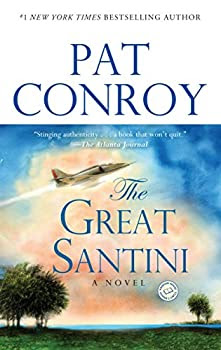
Larry's Southern Luncheon


This month’s book was a work of fiction that offered us a trip back to 1960s America in the South.  The book focuses on a boy coming of age within a strict military family, specifically a Marine Air Corps family stationed in Beaufort, South Carolina.  The book’s title refers to the family’s patriarch, Colonel Bull Meechum (nicknamed the Great Santini), who commands his family as though they are another group of young pilots he must whip into Marines.  The book is a thinly-veiled account of Pat Conroy’s own childhood growing up in such a family. 

MBC’s comments focused on Ben Meechum, Bull’s teenage son facing the age-old conflict of children finding their place and voice within a strong patriarchal family.  The book seemed to hit home with MBC as all us are old enough to have grown up in those times.  And all of us are sons and fathers.  The book should be read within the context of the era the book was written/published – 1976 – well before many of the “tell all” Mommy Dearest genre books arrived and the book’s stark description of black life and policing in the South were not common. 

Larry hosted this first MBC gathering of 2022 at his home yesterday.  The weather cooperated and we were able to dine in Larry’s backyard on a beautiful Marin Sunday afternoon with a Mt. Tam backdrop.  And while no mint juleps were seen, Larry did his best to provide a taste of the South with BBQ steaks, grits topped with collard greens, and finishing with homemade pecan pie topped with just churned vanilla ice cream.  The Meechums of the book would have been right at home. 

The book was generally well received by MBC and reflected the old writers’ adage of “write what you know.”  Or in this case write what you lived through, for Ben Meechum reflects the experience of adolescent Pat Conroy.  In several cases the MBC members were able to relate specific aspects of their own childhoods to those of the fictional Meechums. 

Doug loved the story but found Conroy’s writing a bit prosaic and dull.  Andrew found the trip to the 60’s triggered memories of his own father’s parental style – who grew up in the south and attended West Point.  Paul enjoyed it, especially where all the children pile on to stop Bull from bullying their mother.  He found the book to have a sense of humor and a nice character study.  Tom also enjoyed the character development particularly Bull Meechum – a real piece of work.  He found the story well written and readable.  Dean thought the book was well written and saw the book as a series of vignettes built around the family’s dynamics.  He wondered how we would deal with similar situations today – interfering in a basketball game and dealing with an abusive alcoholic father.  Dean also related to the Catholic family and found MaryAnn, the daughter, as compelling a character as Ben.  Having recommended the book, Larry also identified with the itinerant nature of military life having grown up near an Air Force Base and seeing how some military kids were forced to uproot their lives every few years to move to the next posting. 

In the end, the scoring reflected the consistently positive responses among the MBC, with an average rating of 8.1.   

--Larry

Feb 14, 2019

2019 Ski Weekend--Edited!

Stan prefers Squaw to Lahontan
[Editor's Note: What follows is Larry's overly generous, somewhat snarky take on our ski weekend. Naturally, I've added my own annotations to counter Larry's exuberance.]

A big thanks to Andrew for opening up his new cottagecabin, mansion to us this weekend.  While my room felt a bit like being back at summer camp, especially when bunking with John and Dan, upscale resort living was the theme of the weekend.  Although we had to dig out of snow drifts a couple of times, nobody complained when we were forced to stay an extra day living the aprés-ski life.  [Ed. Note: I would have complained were it not for Dean's tasty Sunday dinner.]

As has become standard for these weekends, the meals were MBC calorie-and-cholesterol-be-damned masterpieces.  Dean's lamb (and lamb-less) curry, Tom's lasagna, and  Paul's crepes were highlights along with the seemingly endless supply of great wines.  [Ed. Note: Don't forget Terry's breakfast feast, your own lunches-to-go, and Dan's soothing Manhattans.]
Larry's almonds, a few cookies, and an empty bottle...dinner's over
Entertainment is always an attraction of these weekends and this weekend was extra special once we determined how to access Andrew's Pay-Per-View account. It was money well spent as we focused on the most highbrow of movies: Clash of the Titans and Venom.  It was also a good weekend to watch golfers of our vintage at Pebble show the young Turks how it's done  -- thanks Phil Mickelson and Bill Murray!  That said, Andrew, we need a bigger screen next year with a better aspect ratio. I'm partial to the one in this URL https://www.youtube.com/watch?v=br9yftCP9Mg (just saying). [Ed. Note:  If you buy it, I'll install it.]

When we were forced into direct conversation due to numerous lapses in Andrew's high-tech entertainment system, we found ourselves engaged in manly topics such as pickup trucks (see related WSJ article https://www.wsj.com/articles/detroits-latest-offering-big-pickups-at-bigger-prices-11549886400), driving in snow, and our favorite -- what ails you?  [Ed. Note:  Well, that was mostly what ails Stan, since he's endured every possible sportsman's trauma in the last couple years.]

The driveway that defeated Tom's 4-wheel drive
The highlights of the weekend were several forays into the wild to search out the local coffee scene.  One trip required a carpool to town where we learned from one of our members how to chat up a 20-something barista using poetry (who knew?).  Another required breaking a trail through thigh deep snow, only to be rewarded with $9 cappuccinos.  The last, however, was truly MBC perfect.  We were treated (i.e., as in they were free) to custom made espresso drinks and affogatos by Andrew's affable neighbor, who's an espresso aficionado, whose equipment and knowledge rival the best San Francisco restaurants (hint -- bean uniformity), and whose home is the one Andrew should have built.  [Ed. Note: Yes, John and Nancy's company, their coffee bar (viva Tinito Rose Café!), and their stylish new home were all lovely.]     

So THANK YOU AGAIN ANDREW for a truly memorable MBC weekend in a new and wonderful place.  Of course Andrew will need to top this next year, so I can't wait to claim my comped room at the Ritz Carlton-Northstar (or can you at least figure out how to directly access the Martis lift from the cabin?).  [Ed. Note:  If Stan or George won't trade up to Martis Camp, maybe Doug will negotiate access rights for us.]

[Ed. Postscript:  The abundant snow at Northstar made for a terrific ski day--terrific, that is, if one ignores the 30,000-vertical-foot goal that Dean scripted for those foolish enough to hang with him.  The overnight snowfall forced Tom to put chains on at the bottom of the driveway and buried Dan's car at the top.  But the worst was Stan's treacherous drive back to Squaw Valley: what should have taken 20 minutes took 2 hours. We can only hope for this kind of snow next year....In the meantime, a brief photo gallery below.]


A simple walk proves chancy...thanks to John 
Still cold, but spectacular weather

Dan's car, covered by a snow angel


When brushing in the dark, Terry errs
Looking down the Martis run from the top of Lookout

John digs out

Nov 4, 2018

Larry Puts A Bug in the River


men's book club review rating v.s. naipaul a bend in the river
Dinner and Acknowledgments

Glenn, who picked our previous two books set in Africa, served us Ethiopian food (Dark Star Safari) and Vietnamese food (Heart of Darkness).  Last Tuesday, Larry aimed for a different kind of authenticity.  He eschewed our novel's references to French food, Indian curry, and American fast food, and instead opted for the native food disdained by Naipaul's fastidious narrator.  Yes, Larry served us insects.  BUGS!! Accompanied by a delicious Ethiopian chicken paired with skewers of beef, couscous, and rice, Larry used high-protein cricket flour for his appetizers and dessert.  Although FDA-approved, his main ingredient was nevertheless milled crickets. Larry, thanks for the reminder that we are only a few notches up the food chain from what we eat.

We must also acknowledge George's presence at our dinner.  He drove down from Reno expecting our hospitality and instead ended up in a hotel room.  Next time, George, don't be so coy in your emails.  Ask for a place to stay!  Or, even better, drive down with John and shack up in the Bambi. 

Our Review and Discussion of A Bend in the River by V.S. Naipaul

Its author a noted fixture of post-war British fiction and purveyor of post-colonial anxiety, A Bend In the River's narrative about a recently-independent African country showcased a well-crafted story (Doug), a fascinating geographic setting (Tom), and memorable images of people and places (Terry).  Those were the positive comments.  For most of us, though, Naipaul's writing served up a series of interesting vignettes punctuated by lengthy introspection.  Too lengthy, for some (Dan).

Set in the 1960's, Naipaul's protagonist, Salim, moves from his family's home on the coast inland to the "town at the bend in the river" where he sets himself up as a local merchant.  The town, and its country, go unnamed but the details in the story and the timing of Naipaul's writing suggest the setting is Zaire (formerly, and once again, the Congo) during the rule of dictator Mobutu Sese Seko.  Salim, a descendant of Indian settlers and therefore a perpetual outsider, bears witness to the upheaval caused by the Big Man's consolidation of power in the face of tribal unrest and a persistent colonial influence.  He observes--with irony and detachment--the African "culture" overlaid on European-funded aid projects, the Big Man's increasing cult of personality, and the shifting allegiances within the local population, including among his friends.

Naipaul's novel has all the earmarks of a Great Novel:  family and politics, race and assimilation,  money and violence, plus lots of literary acclaim.  And yet, as a group, we mustered more respect than affection for Naipaul's storytelling.  We enjoyed the history lesson (Dean), compared it to our own experiences in Africa (Stan, Paul, Tom), and yet still found it wanting.  Paul's headline review (schizophrenia, annoyance, misogyny, conflict) was almost as damning as Dan's refusal to read beyond the halfway point. In the end, our patience was tried more by Naipaul's style (a colonial languor seems to infect his writing) than his substance.  Too bad, because a good story definitely lurks within the book's four long chapters.  

Our Rating of A Bend in the River

Despite all the kvetching, when it came time to rate Naipaul, we gave him the benefit of the doubt with a very decent 6.5.  Notably, our ratings were all within a 5-8 range, which indicates a closer consensus than our comments suggested when we sat down for dinner.  Larry, thanks for pushing us to read a title we had previously rejected but clearly found of interest last Tuesday.  

Next Up:  American Prison by Shane Bauer

Stan could not have argued for a more eclectic set of titles.  He gave us three options:  1)  The Old Man and the Sea paired with Animal Farm, which we rejected as two titles with nothing in common except their length; 2) The Swerve (Greenblatt's prizewinning historiography), which Doug warned us would be slow going and some suspected might be just another Sapiens (you know, the Convenient-Theory-That-Explains-It-All kind of book); and 3) American Prison, whose author infiltrated a for-profit prison and then wrote about it in Mother Jones.  We picked the last option and will steel ourselves for the polemic we know is coming (this did appear in Mother Jones, after all).

Jul 2, 2017

A Moonshot at Larry's

Dinner and Acknowledgments

There was plenty that could have gone wrong at Larry's last Thursday evening.  An aborted rocket launch, a botched shipment from Chattanooga, jello that wouldn't set--all were possibilities.  Thankfully, none occurred and Larry's evening went according to script.  

In a meal that touched on several of the themes in Moonglow, Larry served us Philly cheese steak sandwiches (the protagonist is born in Philadelphia), matzo ball soup (Judaism and anti-Semitism are prominent themes), raspberry jello (the protagonist's final meal), and Moon Pies shipped from the Chattanooga Bakery (the moon mesmerizes both reader and protagonist, and is the novel's central metaphor).

But Larry's best effort came after the meal.  As a tribute to Chabon's imagination, he launched a model rocket (an Estes rocket, Glenn!) several hundred feet above his back patio.  Amazingly, the rocket's chute partially deployed and it landed less than 30 feet away. Very impressive, Larry. 

Our Review and Discussion of Moonglow by Michael Chabon

We've all noticed that a middling book will sometimes engender a lively conversation.  That occurred with The Rise of Superman, another selection by Larry, which had us arguing late into the evening but only earned a passing grade.   Last Thursday, we learned that the reverse is also true.  Moonglow drew strong marks following a lackluster discussion. Chabon demands a minimum commitment from his reader, but how could we focus when Larry's moonshot and Moon Pies were competing for our attention?

In his latest novel, Michael Chabon lulls the reader into thinking he's enjoying a faithfully reconstructed biography of Chabon's grandfather, told through a series of recollections shared at his deathbed. We learn that "my grandfather" (both narrator and grandfather go unnamed) served in the OSS during WWII and entered Poland ahead of the Russians in order to seize Germany's vaunted V-2 rockets and its surviving rocket scientists.  After the war, he married a French woman, did time in prison for assaulting his boss, and retired to Florida after a successful career selling model rockets. 

If Larry's parlor trick was a backyard rocket launch, Chabon's is that he's created a fantastical story about a man who is not his grandfather.  It's not clear who he is, but it is clear that simple biography is secondary to the relationships that connect the characters in Chabon's novel.  Indeed, the reader's epiphany midway through the novel is that Chabon's family's darkest secret involves the grandmother and not the grandfather.

Our cautious embrace of Chabon's clever storytelling disappointed Doug, who was convinced that we would all love the novel for its deliberate mixture of fact and fiction.  As he put it, this is how all family stories are rendered.   We enjoyed elements of the story but it didn't quite come together for some of us--especially as the story is told non-sequentially.  While Armando didn't mind the narrative switches, I felt we were made to suffer so that Chabon could prove his point that life's stories are messy.  Dan and Stan both stopped partway through:  Stan loved the writing but blamed his concussion; Dan opted for the Timothy Egan selection and gave it a 9!  Our guest Stewart chided Dan and Stan, claiming that the novel's second half made the effort worthwhile.

Our Rating of Moonglow

Between the DNRs (Did Not Reads), Moon Pies and rocket gazing, our book discussion grew desultory as the evening grew late.  But when it came to time to rate the novel, we perked up and handed Chabon an impressive 7.8.  Maybe Doug was right after all.

Next Up:  Sapiens: A Brief History of Humankind by Yuval Harari

Stan proposed several titles, but the one I remember and the one we picked was, again, the one recommended by Stan's father.  According to Stan, Harari's tale of the triumph of homo sapiens is his father's favorite book of all time.  Stan, we're used to your hyperbole; invite your dad and let's hear it from him directly. Until then....

Apr 24, 2016

Dinner at the Orphanage with Larry

Men's book club the orphan master's son
Acknowledgments
If Larry's intent last Tuesday was to serve us something that approximated--in tone or taste--the cuisine of Adam Johnson's North Korea, he did a terrible job.  There was no fresh bird's breast, no toxic peaches, no purloined shrimp, and thankfully no ox secretions.  Larry instead took us south of the 38th parallel so we could feast guilt-free on bulgogi, salmon, rice, kimchi (homemade), and mochi (also homemade).  Well-nourished, and with guest Stuart at our table, we looked across the DMZ and wondered about the strange world that inspired The Orphan Master's Son.

(A special acknowledgment is owed to Tom and Dean, who transported Stan and his new wheelchair to Larry's and back.  Stan's recent motorcycle accident in Mexico and his return odyssey--10 hours to the border in the back of a pickup, and another 9 to the hospital in S.F.!--are quite the story.  Stan, we wish you a fast recovery.)

The Book
Johnson's 2013 Pulitzer Prize-winning novel is, on its surface, the story of an Everyman character (named Jun Do) who while navigating the absurdity of modern-day North Korea becomes a symbol of its extremes.  Born to an orphan master, raised among orphans, and later working variously as a kidnapper and an intelligence officer, Jun Do's early years are full of the contradictions of North Korean society.  Johnson ups the ante in Part 2 of the book when the reader realizes that the Commander Ga character from Part 1 has disappeared and Jun Do has assumed his identity.  No longer Everyman, Jun Do's real identity is open to question (literally, as his interrogation spans all of Part 2).

Our positive rating (7.6) belied the mutterings of some (Roy and Dan, I'm talking about you), whose forward progress suffered during the book's transition to Part 2.  With its confusing character changes and relentlessly shifting point of view (back and forth from a literarily omniscient third person to a politically omniscient second person--speaking from a state loudspeaker--to the first person Interrogator posing as our protagonist), not everyone was impressed by Johnson's virtuosity.  Nor was everyone satisfied by the novel's fanciful detour to Texas and that state's later role in the story's climax.

We were all, however, entranced by the many sordid DPRK details extracted (or manufactured) by Johnson.   Replete with gulags, prison mines, foreign kidnappings, widespread hunger, self-criticism sessions, and several Potemkin-style communist paradoxes (e.g., the handmade vintage Mustang using a Lada chassis and Mercedes engine!), Johnson's imagination soars.   Yes, the story is dark (Dean), dystopian (Larry), and surreal (Peter), the narrative saunters (Stan), the "truthiness" quotient is high (thanks for that Colbert reference, Glenn), and there's more than a little misogyny (duly noted by Paul), but many of us thought Johnson did a superb job in grappling with our often conflicting notions of truth, identity, and the nature of power and relationships.  As Doug also noted, Johnson beautifully fictionalizes a society whose reality is already stranger than fiction.   For Terry and me and a couple others, The Orphan Master's Son landed at or near the top of the MBC booklist. 

Next Up
Peter challenged us with his offerings for next month.  With two (!) titles about racism and a failed criminal justice system, another about disease and mortality, and a fourth about Norwegian mass murderer Anders Breivik, we shuddered and instead picked Your Heart is a Muscle the Size of a Fist.  A novel centered around the WTO protests in Seattle, YHMSF has landed on many recent Best Picks lists.  We'll see if it makes ours.

Jan 1, 2015

2014 In Review

With apologies, here’s a belated summary of our meetings in 2014, following our evening imbibing Joy Juice with Dan:


In March, I hosted and had the highest hopes for my favorite novel of 2012, Peter Heller’s The Dog Stars.  This first-person narrative chronicles the post-apocalyptic angst of a pilot (Hig) holed up in a rural Colorado airport with an ornery fellow survivor (Bangley), an aging dog (Jasper), and miles of open (and threatening) prairie around the airfield.  I thought Hig’s obsession with and eventual exploration of the world beyond would capture everyone’s imagination.  It did, but with reservations about Heller's plot contrivances.  At rating time, we gave the novel a modestly positive 7.1.  At least the Filipino food from Ma’s was a hit.
Glenn hosted us in April, with Rory graciously providing the venue.  The dark interior of the McNear House dining room was the perfect atmosphere as we ate stew and discussed Miller’s Cold War classic, A Canticle for Leibowitz.  Most were glad they read (for the second month in a row) this post-apocalyptic novel, but some quibbled with the narrative’s intentionally slow progression (yes, it took centuries before those monks figured out the meaning of a grocery list).  The church/state tension and the hostility towards science were fascinating, as was society's fate in repeating its cycle of self-destruction (barring a technological, not spiritual salvation at the novel's end). Were it not for the novel’s plodding pace, we might have rated it higher than 6.7.

In May, Terry had us reading another period piece, this time from the French Indo-Chinese conflict in the 1950’s.  Graham Greene’s The Quiet American generated ambivalence, as we struggled with the opium-laced duplicity of the English correspondent, Fowler, and the implausibly naïve American diplomat, Pyle.  The book had no likeable characters and instead was an interesting, if disturbing harbinger of the war that followed a decade later in Vietnam.  Following Stan’s loud protestations that Greene’s novel was “not a war book” (no one said it was, Stan), we gave it a thumbs-up rating of 7.1.

Stan hosted us for a twofer in June.  Our chosen book, Saramago’s Cain, was (thanks to the sudden generosity of Random House) twinned with a pre-publication edition of Alan Furst’s latest novel, Midnight in Europe.  Those of us who read Furst’s pre-WWII spy thriller were disappointed.  Thin, poorly plotted, and with unfinished characters.  Enough said.  Cain, on the other hand, was a provocative read for even those whose recollection of the Old Testament had grown dim.  From the Garden of Eden through Cain’s lengthy exile, Saramago's final novel moved along with an almost mystical hum.  Impressed but unpersuaded that Saramago had achieved anything close to the standard he set with Blindness, we gave him the benefit of the doubt with a 6.5 rating.
Following Doug’s summer party in July (thanks again, Doug), we met at Dean’s in August to chew over Reza Aslan’s critically-acclaimed Zealot.  It was mere coincidence that Zealot picked up where Cain left off.  And while no one was pining at the end of the meal for yet another story about the Bible, we were all quite taken by the extraordinary research Aslan poured into this latest account of the story of Jesus of Nazareth.  His thesis that Jesus was less a proselytizer than an overt revolutionary provided plenty of conversation to accompany our meal and as a story was impressive enough to earn a 7.6. And about that meal, Dean did a superb job replicating the cuisine of Israel while operating with a balky hip.  (Glad the bionic version is working well, Dean.)

In September, Larry persuaded us to read Steven Kotler’s controversial work examining the state of “flow.”  In The Rise of Superman, Kotler posits that today’s generation of extreme athletes is achieving extraordinary success by hacking (his term) flow and that this state of being holds promise for all manner of human endeavor.  As a group, we weren’t buying it.  And I mean that literally, as some of us felt that Kotler’s book-length exposition was designed in part to sell his accompanying workshops, seminars, and the like.  While some felt that a state of flow was achievable (Stan and Dan, in particular), no one was willing to defend Kotler’s view that flow is the sine qua non of ultimate performance.  The anecdotes were interesting, but the hyperbole relegated The Rise of Superman to a subpar 5.7.

With the arrival of rain and colder weather, we convened at Peter’s to mull over Dan Brown’s best-selling account of the University of Washington’s 1936 Olympic rowing team, The Boys in the Boat.  To a man, we enjoyed the core story with its (obvious) themes of teamwork, redemption, sacrifice, honor, and the like. But, led by Larry, we panned Brown for larding up a compelling story with extraneous detail and trying too hard to eulogize an entire generation (yes, THAT generation).  We also decried the formula: part Laura Hillenbrand, part Erik Larson, Brown doesn’t quite do justice to either. George shared his early rowing experience in Pocock shells and that rowing gradually disappeared from the national consciousness not only because of the rise of televised sports, but also due to the taint of too many betting scandals. Notwithstanding our quibbles, The Boys in the Boat generated a healthy 7.1 in our final rating.

Roy hosted us—well most of us—in December to share reactions to Gary Shteyngart’s Super Sad True Love Story.  Ok, let’s cut to the chase. Since I didn’t attend, I can’t do justice to the conversation.  But I did collect the votes afterwards and was surprised that Shteyngart, whose peculiar brand of Russian émigré satire isn’t for everyone, managed to pull down a 7.5.  Either Roy’s distillations were especially powerful or I misjudged my fellow MBCers.  Regardless, kudos to Roy for a fine meal (according to my sources), and that’s a wrap for 2014!

Apr 24, 2013

Middle America, Middlesex, and an Ending

With apologies to John, Larry, and Peter, here is an abbreviated and belated summary of three outstanding evenings in the preceding months.

Last December, we arrived at John's house with exceedingly low expectations.  With 1950's Iowa as his backdrop, and knowing that Roy had already mined the era to produce his Midwestern Manhattan-style sandwiches for our discussion of In Cold Blood, John's menu choices appeared limited. Or so we thought. John surprised us by pulling from his warming oven individual foil boxes he'd hand-filled with gourmet meat loaf, organic spuds, and fresh veggies.  Not Swanson's.  Not Hungry-Man.  Just outstanding!

Our reaction to The Life and Times of the Thunderbolt Kid was more muted. We enjoyed Bryson's many references to a childhood that resembled our own.  From Glenn's memory of the x-ray measuring machines in shoe stores, to Larry's recollection of hi-fi cabinets and early color TV's, to our collective memories of delivering newspapers and driving to Disneyland--Bryson had us reminiscing about simpler times.  But it wasn't enough to achieve more than a middling 7.0 rating.  As noted by Paul, Bryson's memoir, while funny and evocative, is a book about not very much.  There is an aimlessness to the narrative that left many of us wanting more.  So we helped ourselves to dessert, talked about growing up, and relaxed in the company of John's excellent guests, Mark and Don.

In early January,  we went skiing.  And a good thing, too.  By late January the snow in the Sierras was declining fast and very little more came our way.  Fortunately, our bye month gave us an extra 30 days to finish reading Jeffrey Eugenides' best known work, Middlesex.

When we met in February, Larry's dinner nicely captured the Greek immigrant story at the heart of Middlesex with servings of lamb and beef gyros (on two types of homemade pita bread!) followed by  assimilationist brownies a la mode (yes, the vanilla ice cream was also homemade).  The book was received almost as well as the dinner.

Many considered it a rich, evocative tale (multi-layered, according to John) that suffered from a single, significant distraction:  the lengthy revelation that the main character, Callie, is a hermaphrodite.  Doug, who was born only 5 miles from Greek Town, wasn't convinced of its import but figured it was Callie's fate given the secret of her forebears. Contrast that with Paul who, having read the novel on his iPhone, complained that the first 2100 pages were mere foreplay to the main act (presumably the reader's epiphany about Callie, but as usual Paul wasn't saying). From there our discussion evolved into commentary about the Greek  diaspora (who knew Peter's hometown of Melbourne boasts the second largest expat Greek community?) and of course hermaphrodites (Terry warned us not to research the subject via Google images; Armando noted that post-coital snails eat their penises to separate). (Editor:  My notes are quite specific on this last point.)  Our 7.5 rating was boosted by Stan who proclaimed the novel "a brilliant work of art," despite having read it over five years ago and retaining only the dimmest recollection of the story line.

Peter's dinner on March 19 was a well-conceived and even better executed St. Patrick's Day meal, replete with corned beef, cabbage, potatoes, carrots, and competing apple and rhubarb pies.  Maybe it's his Commonwealth upbringing, but leave it to Peter to serve up Irish food to accompany our discussion of Julian Barnes, an oh-so-English contemporary novelist.

Barnes' The Sense of an Ending generated an unpredictable reaction.  Unlike Banville's The Sea, an equally introspective novel that had most of us on the fence, we all genuinely liked Barnes' effort.  Like Banville, Barnes delves deeply into the fissures of unreliable memory, in this instance through the perspective of Tony Webster, a retiree who discovers a painful part of his past.  For most of us, the pleasure of this novel was the gradually building suspense that precedes the narrator's realization of the pain he'd caused his school friends long ago.  But not quite all were entranced by Barnes' skillful prose.  Paul, always the contrarian, found the characters uniformly unlikable. His dissenting 5 failed to keep this gem of a novel from pulling down a very respectable 7.5 (an above average rating, especially for a Booker Prize winner).