Showing posts with label Dean. Show all posts

Nov 9, 2025

Catching Up On Our 2023-2025 Books


After Paul's phenomenal luncheon in July 2023, MBC continued reading and eating, but its online posts went quiet.  Thanks to Larry's initiative, our blog posts resumed last May.  What happened during our hiatus?  Here's a condensed account, with apologies to certain hosts (and authors) for more than a few omitted details:  


September  2023  Host - Larry

We met at Larry's to dine on beef/rice/corn/almonds (yes, those are my notes!) and talk about Ishiguro's (then) latest novel, a prescient tale of AI embodied in a robot named Klara.  Purchased as a companion for a sickly child, Klara develops an intelligence and sensitivity that forces one to ask what it means to be human and to love. As a group, we didn't love the book but we found ourselves deeply affected by its characters and the ambition of its author.  For that, we gave it an 
8.0.


November 2023
  Host - Stan

Stan hosted us for our discussion of Geraldine Brooks' novel Horse.  Since our meals are often themed with our books, Stan avoided uncomfortable questions about the provenance of his entrée by serving seafood, not red meat. Once we'd tucked in and begun discussing the book, a clear consensus emerged: no one liked the modern frame story, but everyone liked the novel's inner story.  

The development of American horse racing in the south, as illustrated by the champion Lexington (whose offspring included the famed Preakness), and the role of the enslaved trainers and groomsmen, was a story fascinating unto itself.  What was not fascinating was the forced 21st century story of art, love, and racism.  Nor were we persuaded by the sanitized diction of Brooks' 19th century characters. (The use of the word "slave" is studiously avoided by both oppressor and oppressed.)

If Brooks' intention was to prod her reader into seeing and thinking about a southern economy built on slavery, it certainly worked.  If not for the clumsy framing of an otherwise interesting episode in American history, we might have rated it higher than 6.5. 


December 2023 / January 2024
  Hosts - Glenn and Doug

Due to its length, we read Kingsolver's much-acclaimed Demon Copperhead over two months.  In December, 2023 we and our spouses dined in Glenn's barn and shared passing comments about the novel.  But only passing, because Glenn's food and venue were too distracting to allow for more. Then in January, 2024, we retreated to Doug's for a fuller discussion of this 2023 Pulitzer Prize winner.  (We also enjoyed Doug's roast pistachio salmon and his two excellent desserts--a whiskey cake and a toffee cake, the former perhaps a reminder of the substance abuse so central to our story?)

Yes, the novel is long, and yes it's a re-telling of David Copperfield, but it's populated with an unforgettable cast of characters drawn from rural Appalachia (U-Haul, Fast Forward, Maggot, Angus, and of course Demon himself). We found Kingsolver's narrative about the cycle of poverty, domestic violence, and opiate addiction uplifting in spite of its themes.  Our comments said it all: "among my top 5" (Andrew), "did not want it to end" (Jack), "great characters" (Glenn), "fascinating" (Roy), "developed a complex relationship with the book" (Paul, who always develops a complex relationship with our books), and "puts Hillbilly Elegy to shame" (Doug). Our effusive reaction pushed Demon Copperhead to the top of our ratings with an 8.9.


February 2024
  Host - Dean

Dean hosted us in February for a discussion of Toni Morrison's 1988 Pulitzer winner, Beloved.  Naturally, we ate as our novel's characters ate--or rather, as they fantasized about eating.  Dean's turkey, homemade bread, butter, and blackberry pie were taken from the meal enjoyed by the novel's protagonists (all escaped slaves) just prior to the arrival of the bounty hunters.

Our enthusiasm waned though when it came time to share our reactions to the book. A rewarding read? Maybe. A painful read? Absolutely.  From the outset, Morrison makes it clear the reader's on an arduous journey.  Her characters suffer almost unendurable trauma, only to realize that freedom cannot exorcise the pain of memory. Morrison's famous line aptly reflects her characters' pain and her white reader's guilt: "...the future was a matter of keeping the past at bay."  Before we set aside our discomfort, we applauded Morrison with an 8.0. 


April 2024
  Host - Terry

In April, we gathered at Terry's to share our reactions to Kingdoms of Savannah, a mystery set in today's south but with the legacy of slavery haunting the margins of every page.  Alas, we were not impressed.  But we were impressed by Terry's menu.  With oven-fried chicken, beans, mashed potatoes, biscuits, and chocolate cake, Terry's version of southern comfort food was pitch perfect.

On the surface, Green's novel had the earmarks of a successful southern gothic mystery: a wealthy, landed class bent on protecting its own, a matriarch whose dysfunctional family eventually pulls together, and a murder whose investigation sets fire to it all.  Unfortunately, it had a dime store paperback feel (Jack), plenty of misogyny and twisted characters (Paul), a candy high after our previous titles (Dean), and was overwrought and unbelievable (Doug).  The most interesting plot development (i.e., the revelation that the island targeted for development was the ancestral home of free Blacks who fought for the British during the Revolutionary War) is saved for the end, but by then it was too late for most us.  Our 6.0 rating said it all.


June 2024
  Host - Roy

Our book in June gave Roy the perfect opportunity to display his Japanese culinary skills. Accompanying the freshly-caught panko halibut was an egg custard (Chawanmushi), spinach salad with black sesame (Goma-ae), a cucumber salad (Namasu), and bean sprout with sesame and vinegar (Moyashi). 

His bounty contrasted with the bleak post-war environment depicted in No-No Boy, which chronicled the struggles of Japanese-American men who, while interned during WWII, were given loyalty questionnaires. Those who, for reasons of conscience or principle, answered "No" and refused to serve in the US military were sent to a federal penitentiary.  

We all were deeply moved by the plight of the novel's protagonist, Ichiro, who returns to Seattle after the war and can find neither work nor a place in the Nisei community.  We were also touched by Larry's account of his family's internment experience.  However, we were not impressed by the quality of the narrative: few likable characters (including the protagonist), aimlessly plotted, and an ending without closure. If not for its evocation of a seminal moment in our nation's history, No-No Boy would not have earned our modestly positive 6.9 rating.


August 2024
  Host - Tom

When Tom hosted us in August, he served us old-fashioned southern food to aid our discussion of a middle-aged man's return home to Memphis, at the request of his sisters, to deal with his father's infatuation with a much younger woman.  Despite its 1987 Pulitzer Award for Fiction, Peter Taylor's finely-etched story of marital, sibling, and generational conflict failed to interest us nearly as much as Tom's menu for the evening.

The writing was fine in an old-fashioned sort of way, but there was too little to sustain our interest.  As a quiet study of southern manners, the story might have worked.  But when the message is simply that there's no escaping 1) your southern roots, 2) your domineering father, or 3) your own miserable relationship, our response is: 1) it's unsatisfying, and 2) it ain't Faulkner. Garth's comment was the most damning: the book felt like Ambien laced with Thorazine.  


September 2024
  Host - Jack

In September Jack introduced MBC to Dennis Lehane and his 2023 novel about family, race, and mob politics during Boston's 1974 school desegregation crisis.  With some criticism for its "beach read" feel and its pat ending, we mostly found Small Mercies to be a worthy end-of-summer escape. 

Primed with Jack's excellent shepherd's pie, we dug into Lehane's murder mystery in South Boston and found ourselves mired in a discussion of the effects of school desegregation in the 1970s. Dean saw it in San Francisco, Roy lived through it in Indiana, and Stan experienced it in Marin County. Tom, on the other hand, noted that his large public high school in Siskiyou County was almost entirely white. With those asides, we concluded that the strength of Lehane's novel (apart from a mystery well told) was its ability to paint the various shades of hate and racism in convincing detail.  For that, we awarded him a 7.5.


October 2024
  Host - Larry

In October, we convened at Larry's for a delicious paella and a spirited discussion of Percival Everett's 2001 satirical novel, Erasure.  Any discussion of Erasure is complicated by the nested narratives that Everett clearly had fun assembling.  The reader learns at the end that the story is in fact a movie about a story about a book written by an impoverished academic posing as a Black street kid with an authentic new voice. The whole thing is a send-up, the ultimate meta-narrative. So our comments on the story wandered into and out of the main story and the street kid's story (aptly named Fuck) with mostly appreciation for Everett's cleverness.

Doug chided us for falling into the very trap set by the novel's protagonist, a professor who is so white in culture and upbringing that he has to contrive a ghetto story written by a fictional hoodlum in order to sell his work.  But we didn't mind.  Dean liked the Grateful Dead reference in Stagg R. Leigh's name; Larry appreciated the novel's focus on racial identity and belonging; Paul and Glenn enjoyed the implicit taunt to like the story or be seen as racist; and Terry, always the outlier, suggested that the book had virtually nothing to do with race but was merely about selling a winning formula.  We gave the book an 8.2 for its "novel" approach (Stan's pun), and we excoriated Terry for his iconoclasm.


January 2025
  Host - Paul

At 945 pages, and in clear violation of our 500-page limit, Lonesome Dove required an extra month of prep, which meant we met next in January.  The delay was worth it:  Paul treated us to a feast of Old West-inspired fare, with appetizers of crickets in molasses, a single roast dove (lonesome indeed!), and cowboy skillet bread.  The rest of the meal (vegetarian chili, pork adovada, brown and white rice, corn bread, and blueberry cobbler) was almost anti-climactic. Even with our stomachs full, we found much to dissect, share, and ultimately praise in McMurtry's magnum opus.  Despite its flaws and its age, Lonesome Dove's greatest virtue is its storytelling, with characters both convincing and compelling. And with few exceptions, it held us captive for almost 1,000 pages. For that, McMurtry's 1985 novel ascended to the top of our ratings with a 9.0.


March 2025
  Host - Dan

After a string of novels, Dan brought us back to non-fiction with an account of the rise and fall of Venezuela under the Chavez/Maduro regime.  Fortunately, the food scarcity endemic in today's Venezuela had no effect on our meal, as Dan plied us with a delicious all-Venezuelan menu of stew, beans, rice, plus a tasty chocolate cake courtesy of Penny.

As to the book, our discussion languished at times. The problem with discussing non-fiction is that it's rarely interesting to recite facts to others who read the same facts. Facts need context, and Neumann provided some, but mostly he just expanded a series of articles (he was the NYT's bureau chief in Caracas) into a book.  Our takeaways included: yes, the erosion of democracy in Venezuela's early days of Chavismo feels eerily similar to what we see here today; Venezuela's long decline into authoritarianism can be attributed to a national fascination with strong leaders; and Venezuela's massive oil wealth proved to be its downfall. For a narrative both interesting, tedious, and depressing, we couldn't muster better than a 6.7 rating.

Aug 30, 2025

Two Novellas, Two Men: A Hardscrabble Dinner at Dean's


Books: Train Dreams by Denis Johnson & Ethan Frome by Edith Wharton

On Monday, the Man Book Club accepted Dean’s challenge to double up and read two novellas: Train Dreams and Ethan Frome. Both center on men living hard, isolated lives in rural America around the turn of the 20th century. Train Dreams traces the life of Robert Grainier in the wilds of northern Idaho, while Ethan Frome gradually reveals—through flashbacks—the bleak circumstances surrounding Ethan, his wife Zeena, and her cousin Mattie in rural Massachusetts. Although both books depict stark, unforgiving landscapes and lives, members’ reactions varied widely.

Highlights from the Discussion

  • Dean (host): Reminded us that Wharton wrote from her early 1900s vantage point as a New York City aristocrat. He found Ethan overly melancholy and “whiney,” whereas Grainier in Train Dreams showed more resilience. Both books, he noted, were so vividly written they put you “right there.”
  • Paul: Liked both books but especially Ethan Frome, which struck him as Shakespearean with its annoying yet tragic characters. He admired how both novellas managed to cover such broad spans of time.
  • Tom: Appreciated Train Dreams for being short, well-written, and covering many years. He also liked Ethan Frome but found it cold, pathetic, and surprisingly loveless, though still well-crafted.
  • Doug: Loved Johnson’s energetic writing in Train Dreams—especially how animals are almost human characters and how nature’s beauty shines through. Found Ethan Frome cold and its characters flat.
  • Andrew: Focused on Train Dreams. Thought the third-person narration kept readers out of Grainier’s head but admired how 60 years of life fit into so few pages. Noted that both protagonists live at a subsistence level.
  • Larry: Enjoyed Train Dreams’ historical sweep and was struck by Grainier’s lifelong guilt after joining an unjust mob attack. Disliked Ethan Frome—he never sympathized with Ethan and felt the climactic sledding accident was over-foreshadowed.
  • Stan: Praised Ethan Frome as well written but found Train Dreams “absolutely incredible,” with much more substance.
  • Jack: Came for Dean’s excellent dinner (meat pie and pickle dish from Ethan Frome). Listening to both books as audiobooks shaped his impressions: Ethan seemed “milquetoast,” while Grainier came across as tough and admirable.
  • Roy: Valued Train Dreams for its vivid portrayal of nature and Grainier’s hermit-like life. Reflected on his own family’s recent past with horses and no electricity. In Ethan Frome, he focused on the simple domestic tasks and saw the ending as a pact among the three characters.
  • Glen: Liked both books. Described Train Dreams as dreamlike, with Grainier’s visions of his dead wife and a wolf-girl he believes to be his daughter. Enjoyed Wharton’s descriptive writing and compared Grainier and Mattie’s sledding pact to Thelma & Louise.
  • Terry: Called Train Dreams one of the most impressive books MBC has read, likening the perspective to looking down on Grainier’s life from above. Found Ethan Frome more “ground level,” even giving readers a peek into Ethan’s brain at the sled crash—yet still saw Ethan as a “lumox.”

The Vote

  • Train Dreams: 8.2 average (scores 7–10)
  • Ethan Frome: 6.9 average (scores 5–9)

MBC recommends reading the two together. At just over 100 pages each, they’re compact but powerful portraits of lonely men grappling with hardship. The group noted how much has changed since the early 1900s—and how much hasn’t, especially the sense of isolation felt by some young men today in the age of social media.

--Larry

Oct 29, 2022

A Hell of a Meal at Dean's


Dinner and Acknowledgments 

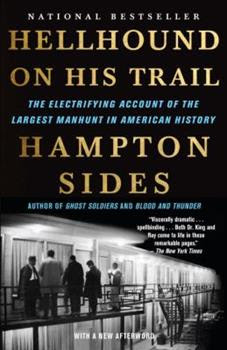
In honor of Martin Luther King Jr.'s southern roots, last Tuesday Dean laid on an evening of southern-style cooking that rivaled any other meal he's prepared for us. After a starter of "Memphis treats" (courtesy of Dick Cohn), Dean served up pulled pork, black-eyed peas, collard greens, and corn bread, followed by an apple crumble dessert. The clamor for seconds was proof that Dean exceeded his already-high standards. If it weren't for Dean's vintage 30.06--the same model used to kill King--we might have walked out with all of his leftovers. [Ed. note:  a tasteless reference, to be sure, but see below graphic.]  We might also have absconded with Stan's classic 1934 roadster, since it was blocking Dean's driveway!

Dean sighting his Remington Gamemaster
Stan's 1934 Ford

Our Review and Discussion of Hellhound on His Trail by Hampton Sides

While the focus of Sides' story is the assassination of Martin Luther King, Jr.--which, as Doug noted, occurs exactly at the midpoint of the book--the reader is treated to a split narrative leading up to that fateful moment.  In alternating chapters, we learn about King and his controversial arrival in Memphis and James Earl Ray's circuitous journey from "Jeff City" to the Lorraine Motel. After the shooting, the pace quickens as the nation's law enforcement apparatus (including, as Tom noted, 3,000 FBI agents!) spends the next two months identifying and tracking Ray while the country convulses and the civil rights movement grieves.

Despite the lack of conclusive answers to questions that still linger for the conspiracy-minded (Did Ray act alone? Was the FBI complicit?), we all enjoyed and felt enriched by Sides' meticulously-researched account of King's assassination and the ensuing manhunt, especially as so many details were new to us.  As I noted, most of us were too young to appreciate the events at the time yet too old for those events to find their way into our school curricula.  And others pointed out that Ray's actions were usually (and rightfully) a mere footnote in the broader history of King, the SCLC, and the civil rights struggles of the 1960's.

While the first half of the book came in for criticism (George called it choppy; Paul called it filler), the latter half vindicated our (and Sides') efforts.  Larry likened the story's arc to that of The Feather Thief, where after the climax the author entertains the reader with a well-researched thesis on how the crime was committed.  In this case, Sides convinced most of us that there was no conspiracy afoot and that, as Roy put it, a "total misfit loner" did indeed shoot King, while he was under constant police surveillance, and then eluded national and international authorities for months as he tried to make his way to Rhodesia.

Our Rating of Hellhound on His Trail

Sides doesn't simply tread old ground with his account of Ray's movements and motivations; he pulls gems from an exhaustive record to offer the reader more insight on an unlikely assassin.  From Ray's $200 nose job (Terry's favorite) to his prison escape in a bread box (Dean's) to his aborted jewelry store heist in London's Paddington neighborhood (a stone's throw from my old flat!), Sides shares vignettes that entertain and inform.  For that, he lands in our current Top Ten with an 8.2 rating.

Next Up:  Captains Courageous by Rudyard Kipling

Roy presented us with an unusually eclectic list of titles, including (gulp!) Homer's The Odyssey, Strayed's Wild, Martel's Life of Pi, Torday's Salmon Fishing in the Yemen, and Kipling's Captains Courageous.  Kipling eked out a win over Torday, so in December we'll see if a 15-year old railroad scion stranded at sea piques our interest as much as King and Ray did this month.

Nov 27, 2020

Dean's Tree Huggers Unite (via Zoom)

Last Sunday was time for another Zoom distanced meeting of the Man Book Club.  And while it would have been appropriate to have each of us Zoom-in while embracing or seated in our favorite tree, given this month’s book – The Overstory by Richard Powers, we eschewed the outdoors for the comfort of our manmade arbors of dens, dining rooms, and back bedrooms.

Reading the entire 500+ page book was, like trying to hack through the book’s redwood trees, a daunting task for several of our members.  But even those who had completed only the first half of the book agreed that The Overstory was well written and compelling - especially the Chestnut story, which intertwined the Hoel family immigrant saga and gave new meaning to a “family photo album”.  Indeed, the Chestnut story was MBC’s favorite of the several disparate stories with which Powers begins the book.  The outlier (and there always is one) was Terry, who also liked Mimi Ma’s, daughter of Chinese immigrants, story.

In general MBC found the last part of the book wanting (or per Doug, it needed an editor) – reflecting Powers’ not completely successful (in our opinion) attempt to weave the disparate stories and nine main characters from the book’s first half into a cohesive west coast redwood forest climax and then, as an epilogue, short chapters intended to tie up a few loose story arcs  Even with those shortcomings, Powers’ ability to create a richly detailed and diverse narrative about trees struck a sentient and anthropomorphic chord among the MBC, confirming The Overstory’s 2019 Pulitzer Prize award.

The book inspired MBC members to reminisce about their time spent in forests -- The Great Smokey Mountains (Stan), Plumas National Forest (Andrew).  Others paused to reflect on logging as an extractive industry that places little value on the health of the overall ecosystem (Tom and Dean) and how several characters were obviously based on the real life experiences of people like Julia Butterfly, who was willing to live in the real redwood trees to protect them from loggers (Paul) or Professor Suzanne Simard, whose research tenacity led to radical insights into tree and forest ecosystems (Larry).

Otherwise, the members of MBC continued their dogged determination to get through 2020.  Even as 2021 is on the horizon, we already can see events like MBC ski weekend being cancelled (and with it the annual slip and slide car contest down Andrew’s iced driveway).  But we are grateful that COVID has not impacted any of us or our families.  We look with bated breath (behind masks of course) to a time in 2021 when MBC can again meet in person.

Next month’s book continues the forest theme but with a decidedly more predatory bent – The Tiger, by John Vaillant, a non-fiction lesson teaching us that humans (and even bears) are not always at the top of the food chain.  Roy hosts in January.  Bring your pith helmets.

--Larry

Sep 17, 2017

Dean's Dystopia


men book group review rating 1984 by george orwell
Dinner and Acknowledgments

Our dinners are often staged by the host to reflect the characters or events in the book under discussion.   Last Thursday, Dean faced an especially difficult challenge in preparing a meal that would be edible yet reminiscent of the dystopia in George Orwell's best-known work. 

As he has in the past, Dean rose to the challenge. His genius was in recognizing that there was nothing worth eating in the bleak wartime environment of 1984. So instead he mined the year of 1984 for his recipes.  We were served grilled steaks in pepper sauce, scalloped potatoes, and stewed vegetables--all reputedly popular in 1984!  Dean made sure we got the point by setting his Pandora playlist to 1984, resulting in background tracks from Prince (RIP!), Kenny Loggins, Tina Turner, and others.  In a nod to Orwell, though, Dean did offer us a dessert of genuine chocolate bars washed down with cups of Victory coffee. Bravo, Dean!

Our Review and Discussion of 1984 by George Orwell

Written in 1949, and set in a bombed-out London of the future, Orwell’s iconic novel describes a world that has devolved into three warring superstates, one of which (Oceania) is ruled by the remote but all-knowing Big Brother.  The novel's protagonist, Winston Smith, is presented as a conscientious party member who becomes disaffected, is caught and tortured, and later finds solace in his relationship with Big Brother.

While most of us were familiar with the story, we were nevertheless struck by the parallels between our reality and Orwell’s fantasy.   Dean compared the doublespeak practiced by Winston’s Ministry of Truth to the “alternative facts” touted by the current White House. Paul was more intrigued by how today’s technology (CCTV, facial recognition, bodyworn cameras, GPS tracking) has become as pervasive in our lives as Orwell’s “telescreen” is in Winston’s. If 1984 was meant to warn us about the perils of technology in the hands of a totalitarian government, Terry worried that the warning may be lost on today’s youth, who appear too willing to trade privacy for convenience.

Orwell’s depiction of the concentration of government power and the rise of an elite class of party members caused Larry to muse that, unlike the state in 1984, it is the technology behemoths that exert so much control in our daily lives. Larry’s commentary about the rise of Silicon Valley led John to complain that our knowledge-based economy is contributing to the development of an underclass that rejects education and advancement, much like the “proles” in 1984. 

Our Rating of 1984

Our discussion would have continued but for the late hour.  At rating time, we all acknowledged the continuing relevance of 1984 even if we were less impressed by its plot and, in Peter’s view, its dated writing. For his prescience, if not his storytelling, Orwell pulled down a respectable 7.4.

Next Up:  The Taking of K-129 by Josh Dean

Thanks to Dutton’s generosity, we received advance copies of The Taking of K-129, Josh Dean’s account of America’s covert effort to retrieve a Soviet nuclear sub that sank in international waters. Next month, we will leave the social paranoia of the early Cold War and turn to the US-USSR military tensions of the early 1970s.

Feb 29, 2016

Dean Delivers, Mongolian Style

Men's book club review Genghis Khan and the Making of the Modern World Jack Weatherford
Acknowledgments
Tuesday's dinner was an impressive act of culinary celerity.  Dean rushed back from a father-son ski trip at Kirkwood to research and prepare an all-Mongol feast. (Meaning the food, not the guests--or not all of them anyway.)  With Mongolian beef and scallions accompanied by buuz (those delicious steamed dumplings) and a Mongolian carrot salad, Dean met his own--and our--high standards.  The Tsingtao beer and San Marino Cellars washed it all down nicely.

The only false note, Dean, was the pure butter shortbread in your yogurt dessert.  Unlike the rest of your menu, it wasn't home-made and its provenance was disturbing.  (Did I see a Walker's box in the trash? You know Genghis never made it past Gaul!)

The Book
Jack Weatherford's history of Genghis Khan makes a bold claim:  that as Khan and his progeny advanced westward, and established their dominion throughout the Caucasus, the Middle East, and into central Europe, their ideas and technology helped produce the Age of Enlightenment.  Who knew that this barbarian on horseback had such a civilizing effect?

We didn't, and so we questioned Weatherford's thesis and wondered if his research was as rigorous as it purported to be.  (His constant references to the so-called Secret History and his refusal to footnote any of his conclusions didn't inspire confidence.)  Our most reliable cynic--who shall go unnamed--offered an alternate sub-title:  "...and the Great Mongolian Blow Job."

Cynicism aside, we were treated to a litany of fun facts by Weatherford.  The Mongols were the first all-cavalry warriors and their speed accounted for much of their success.  They were the first to use gunpowder and shrapnel-laden projectiles in war.  They invented paper currency and standardized monetary units of measurement throughout their empire. They institutionalized diplomatic immunity, eschewed torture, guaranteed freedom of religion, created a professional class of administrators, and offered advancement based on merit not family. Among those they conquered, they decapitated the aristocracy and created new democratic structures loosely modeled after their khuriltai.  They invaded and united China, laid out modern Beijing, and built the Forbidden City.  Whew! But, as Larry notes with ethnic pride, they never conquered Japan.  (Editor's own ethnic observation:  nor did they take the Philippines, leaving that task for Larry's ancestors some 500 years later.)

Weatherford posits that the Mongolian empire was brought down by the lowly Chinese rat and its rapid transmission of the bubonic plague.  Wait, what?  Oh, who cares.  A fascinating story--albeit one laced with repetitive details and dubious scholarship--prompted us to give Weatherford a decent 6.5.

Next Up
John hosts us in March and, in light of his mother's recent diagnosis, asked us to select from several titles about the very difficult subject of death and dying.  We picked Atul Gawande's Being Mortal.  Until our next meeting, we'll continue to keep John's family in our thoughts. 

Jan 1, 2015

2014 In Review

With apologies, here’s a belated summary of our meetings in 2014, following our evening imbibing Joy Juice with Dan:


In March, I hosted and had the highest hopes for my favorite novel of 2012, Peter Heller’s The Dog Stars.  This first-person narrative chronicles the post-apocalyptic angst of a pilot (Hig) holed up in a rural Colorado airport with an ornery fellow survivor (Bangley), an aging dog (Jasper), and miles of open (and threatening) prairie around the airfield.  I thought Hig’s obsession with and eventual exploration of the world beyond would capture everyone’s imagination.  It did, but with reservations about Heller's plot contrivances.  At rating time, we gave the novel a modestly positive 7.1.  At least the Filipino food from Ma’s was a hit.
Glenn hosted us in April, with Rory graciously providing the venue.  The dark interior of the McNear House dining room was the perfect atmosphere as we ate stew and discussed Miller’s Cold War classic, A Canticle for Leibowitz.  Most were glad they read (for the second month in a row) this post-apocalyptic novel, but some quibbled with the narrative’s intentionally slow progression (yes, it took centuries before those monks figured out the meaning of a grocery list).  The church/state tension and the hostility towards science were fascinating, as was society's fate in repeating its cycle of self-destruction (barring a technological, not spiritual salvation at the novel's end). Were it not for the novel’s plodding pace, we might have rated it higher than 6.7.

In May, Terry had us reading another period piece, this time from the French Indo-Chinese conflict in the 1950’s.  Graham Greene’s The Quiet American generated ambivalence, as we struggled with the opium-laced duplicity of the English correspondent, Fowler, and the implausibly naïve American diplomat, Pyle.  The book had no likeable characters and instead was an interesting, if disturbing harbinger of the war that followed a decade later in Vietnam.  Following Stan’s loud protestations that Greene’s novel was “not a war book” (no one said it was, Stan), we gave it a thumbs-up rating of 7.1.

Stan hosted us for a twofer in June.  Our chosen book, Saramago’s Cain, was (thanks to the sudden generosity of Random House) twinned with a pre-publication edition of Alan Furst’s latest novel, Midnight in Europe.  Those of us who read Furst’s pre-WWII spy thriller were disappointed.  Thin, poorly plotted, and with unfinished characters.  Enough said.  Cain, on the other hand, was a provocative read for even those whose recollection of the Old Testament had grown dim.  From the Garden of Eden through Cain’s lengthy exile, Saramago's final novel moved along with an almost mystical hum.  Impressed but unpersuaded that Saramago had achieved anything close to the standard he set with Blindness, we gave him the benefit of the doubt with a 6.5 rating.
Following Doug’s summer party in July (thanks again, Doug), we met at Dean’s in August to chew over Reza Aslan’s critically-acclaimed Zealot.  It was mere coincidence that Zealot picked up where Cain left off.  And while no one was pining at the end of the meal for yet another story about the Bible, we were all quite taken by the extraordinary research Aslan poured into this latest account of the story of Jesus of Nazareth.  His thesis that Jesus was less a proselytizer than an overt revolutionary provided plenty of conversation to accompany our meal and as a story was impressive enough to earn a 7.6. And about that meal, Dean did a superb job replicating the cuisine of Israel while operating with a balky hip.  (Glad the bionic version is working well, Dean.)

In September, Larry persuaded us to read Steven Kotler’s controversial work examining the state of “flow.”  In The Rise of Superman, Kotler posits that today’s generation of extreme athletes is achieving extraordinary success by hacking (his term) flow and that this state of being holds promise for all manner of human endeavor.  As a group, we weren’t buying it.  And I mean that literally, as some of us felt that Kotler’s book-length exposition was designed in part to sell his accompanying workshops, seminars, and the like.  While some felt that a state of flow was achievable (Stan and Dan, in particular), no one was willing to defend Kotler’s view that flow is the sine qua non of ultimate performance.  The anecdotes were interesting, but the hyperbole relegated The Rise of Superman to a subpar 5.7.

With the arrival of rain and colder weather, we convened at Peter’s to mull over Dan Brown’s best-selling account of the University of Washington’s 1936 Olympic rowing team, The Boys in the Boat.  To a man, we enjoyed the core story with its (obvious) themes of teamwork, redemption, sacrifice, honor, and the like. But, led by Larry, we panned Brown for larding up a compelling story with extraneous detail and trying too hard to eulogize an entire generation (yes, THAT generation).  We also decried the formula: part Laura Hillenbrand, part Erik Larson, Brown doesn’t quite do justice to either. George shared his early rowing experience in Pocock shells and that rowing gradually disappeared from the national consciousness not only because of the rise of televised sports, but also due to the taint of too many betting scandals. Notwithstanding our quibbles, The Boys in the Boat generated a healthy 7.1 in our final rating.

Roy hosted us—well most of us—in December to share reactions to Gary Shteyngart’s Super Sad True Love Story.  Ok, let’s cut to the chase. Since I didn’t attend, I can’t do justice to the conversation.  But I did collect the votes afterwards and was surprised that Shteyngart, whose peculiar brand of Russian émigré satire isn’t for everyone, managed to pull down a 7.5.  Either Roy’s distillations were especially powerful or I misjudged my fellow MBCers.  Regardless, kudos to Roy for a fine meal (according to my sources), and that’s a wrap for 2014!

Oct 21, 2012

Dean Picks a Fight

Acknowledgments
As we watched the second Presidential debate last Tuesday, Dean sweated the details and served up a fine all-American meal.  Any similarities to the banquet food in Fight Club were pure coincidence.  Yes, the pureed soup was suspect, but we were assured that Dean's pumpkin and summer squash were all natural and all from his very own garden.  We had no such concerns about our New York strip steaks, roasted endives, native rice, and apple crumble, as all were quite excellent.

The Book
We chose Fight Club from a list of titles that invoked the nihilists of the 19th century and the existentialists of the 20th century.  Some of us quibbled with the writing, but the content left no one wanting.  Pahlaniuk's short novel based on a short story (originally, only 7 pages) about disillusioned men who converge on late night bars to brawl in private is more than simply a mood piece about Yuppie angst.

We argued about the  writing and its inconsistent delivery (with Dean praising the narration and chapter inversions, and Doug and I picking at its consciously disjointed, anecdotal style) and some of us were put off by a world none of us could fully fathom (except Stan, who called Fight Club the "epitome" of fiction) .  However, all of us were struck by the atavism of Tyler Durden--schizoid or not--with Paul phoning his kudos in from Austin, TX.

The story's hard edge lost a few of us, though.  Tom, uncharacteristically, refused to read beyond 50 pages, and normally complaisant Jack excoriated the book's characters for their lack of empathy.   (I think that was sort of the point, Jack.)

Our votes were generally favorable, but the 4's from Jack and Doug limited Fight Club to no better than a 7 in our ratings book.

Next Up
We don't have either our host or a title selected for November/December, but that will be quickly remedied.  Stay tuned for more.

Nov 14, 2010

Dean Lets the Thugs In


Acknowledgments
Last Tuesday, Dean opened up his home to an uncivilized lot:  footballers, wankers, thugs, and the like.  In keeping with Buford’s decidedly lowbrow motif, Dean served up bangers and mash and peas and pudding.  But it was like no workingman’s meal I ever tasted during my years in England.  Dean’s bangers, for example, were a gourmand’s dream, made by the Lockeford Meat and Sausage Company near Stockton.  His blue Stilton and aged cheddar were direct from the UK.  The only false note was the dessert. The English don’t get our style of pudding and most of them believe that fresh fruit is an affectation of the rich!

Among the thugs who crossed Dean’s threshold were two of Marin County's more reprehensible knaves.  John and Garth appeared to have arrived straight from the terraces at Old Trafford or Stamford Bridge.  In the picture below, they are flanking Stan, who needs no makeup for the part….


The Book 
Buford’s seminal study of crowd behavior—specifically the behavior of football fans in England—has been hailed by no less than Newsweek as one of the most important works of the 20th century.  Whether it’s his academic pedigree (UC Berkeley, Cambridge, and publisher of Granta), his peculiarly American perspective, or his willingness to immerse himself fully in the subject matter, we all agreed that Buford’s examination of the phenomenon of football hooliganism was utterly absorbing.  Our fascination, however, came with all the enjoyment of watching a train crash (or, as Peter insisted on reading aloud, a man extracting and bursting a police officer’s eyeball--using his mouth!). 

Dan’s story about his brother’s employee in Manchester added to our discomfort with Buford's thesis.  According to Dan, the employee was unequivocal in his hatred of Liverpool and its supporters.  Not rivalry, not competitive dislike—but pure hatred.  Doug asked why such animosity—and its accompanying violence—doesn’t exist here.  None of us could say why, other than to fall back on some of Buford’s own suppositions (cultural differences, chronic unemployment, island mentality, lost imperial glory, etc.).  Roy felt that such violence wouldn’t be condoned here:  at the first sign of agitation, the guns would come out.  Of course, that prompted George’s recollection of Kent State, where the guardsman’s warning shot precipitated rather than prevented violence.  Against the backdrop of street riots in Oakland stemming from Johannes Mehserle’s light sentence for killing Oscar Grant, we all appreciate how sometimes even the most foreseeable crowd behavior can’t be averted. 

Our consensus was that Buford’s treatise was an unexpected if disturbing pleasure.  The voting was uniformly high, coming in at a respectable 7.3 and vindicating Dean’s persistence these last three years.  Dean, I apologize for my steadfast opposition to Thugs; I was wrong.  (And, Garth, I apologize for all the colons and semi-colons in this write-up.)

Next Up
Next month we read J.R. Moehringer’s much-acclaimed memoir, The Tender Bar.  It was sufficiently compelling that Andre Agassi allegedly kept putting the book down so as not to finish it too quickly.  When he finally did finish the book, he immediately called Moehringer and persuaded him to ghost write his own memoir, Open, which was published last year under Agassi's name only.  Explaining his absence from the title page, Moehringer told the New York Times that "the midwife doesn't go home with the baby."  Let's hope that we share Agassi's enthusiasm for The Tender Bar when we meet next month.

Nov 16, 2008

Dean's Delicious Fish Tale


Acknowledgments
As our host on Friday, Dean was inspired by Jack London to create a meal that casually mixed seafood and ethnicity. We learned that Dean’s excellent grilled halibut and spinach lasagna reflected his own mixed Croatian and Italian roots. While London might have sneered (given his animus towards immigrants), we were delighted that the legacy of Tadich’s fine cuisine—and even finer wait staff—lives on in Dean’s household.

We should also acknowledge Roy, in absentia. With ingredients from Tom, and with a nod to London’s enterprising Greek and Italian fishermen, he supplied us with unmarked bottles of ouzo and grappa. But Roy did more than lubricate our discussions. He also generously offered to take us on his boat through the Carquinez Straits to Benicia and down to the old oyster beds in Oakland. Larry and I can’t make it next weekend, so instead we’ll wave our yellow handkerchiefs as you come around Point Pedro.

Finally, thanks to the men in our group who, along with their wives, appeared last night to support Chris’ fine work at the helm of the Diabetic Youth Foundation. What a beautiful evening at the Claremont Resort in Oakland. And how striking to see our men sporting ties and starched collars!

The Book
Jack London delivered exactly what our 14 in attendance were expecting: a series of short, readable tales of San Francisco Bay, circa 1900. His stories got us talking about the local geography, and our neighborhood’s proximity to many of London’s own adventures. From the Marin Islands to McNear’s Landing to the San Rafael Slough (which we now know extended as far as Davidson Middle School), London's tales of the bay are littered with local landmarks. And so we happily digressed into topics as varied as the nearby egret colony, the disappearance of native shell mounds, the massive Gold Rush-era sediment flows into the bay, and more. We thank Armando, our naturalist, for his wealth of detail and Stan for his perpetual willingness to share on a more, ahem, personal level. (His real estate holdings aside, did he really stalk those egrets in his birthday suit?)

Tales of the Fish Patrol was just one collection of many short stories Jack London turned out during his abbreviated career. Tom surprised us by explaining that London never actually worked the fish patrol, but instead took his details from others. Regardless, the writing was engaging and fast-paced and would have produced universal acclaim had not one of us spoiled the party by revealing that London’s short stories predominantly targeted the adolescent reader (Tales of the Fish Patrol, for example, was serialized in 1905 in Youth Companion) and that London was typically paid by the word for his stories (at his peak, he commanded up to 20 cents).

Our attempt to rate Tales of the Fish Patrol (it eventually received a 6.7) was complicated by the insubordination of a few. Once Dan proclaimed that London deserved a 10, Stan engaged in a petty act of vote cancellation with his 1. Thereafter, Glenn, claiming inspiration from This is Spinal Tap’ s Nigel Hufnel, raised the ante with an 11, which was later canceled by yours truly. Shame on us all for these antics! But congratulations on one collective accomplishment: this is the first book that everyone finished before the meeting.

Next Up
Armando offered us a fine set of choices for our next gathering: Robert Laxalt’s Sweet Promised Land (a paean to our fathers), V.S. Naipaul’s A Way in the World (his fictionalized autobiographical essays), and two titles by Gabriel Garcia Marquez, News of a Kidnapping and Of Love and Other Demons. (Note to MBC philistines: 2 of the 3 writers selected by Armando won the Nobel Prize for Literature; the third received two Pulitzer nominations. It can be done.)
.
We opted for News of a Kidnapping, Marquez’ non-fiction account of the Medellin Cartel’s murder and kidnapping spree in Colombia. If, after dinner, Armando dusts our desserts with a fine white powder, we trust he'll be using confectioner's sugar.